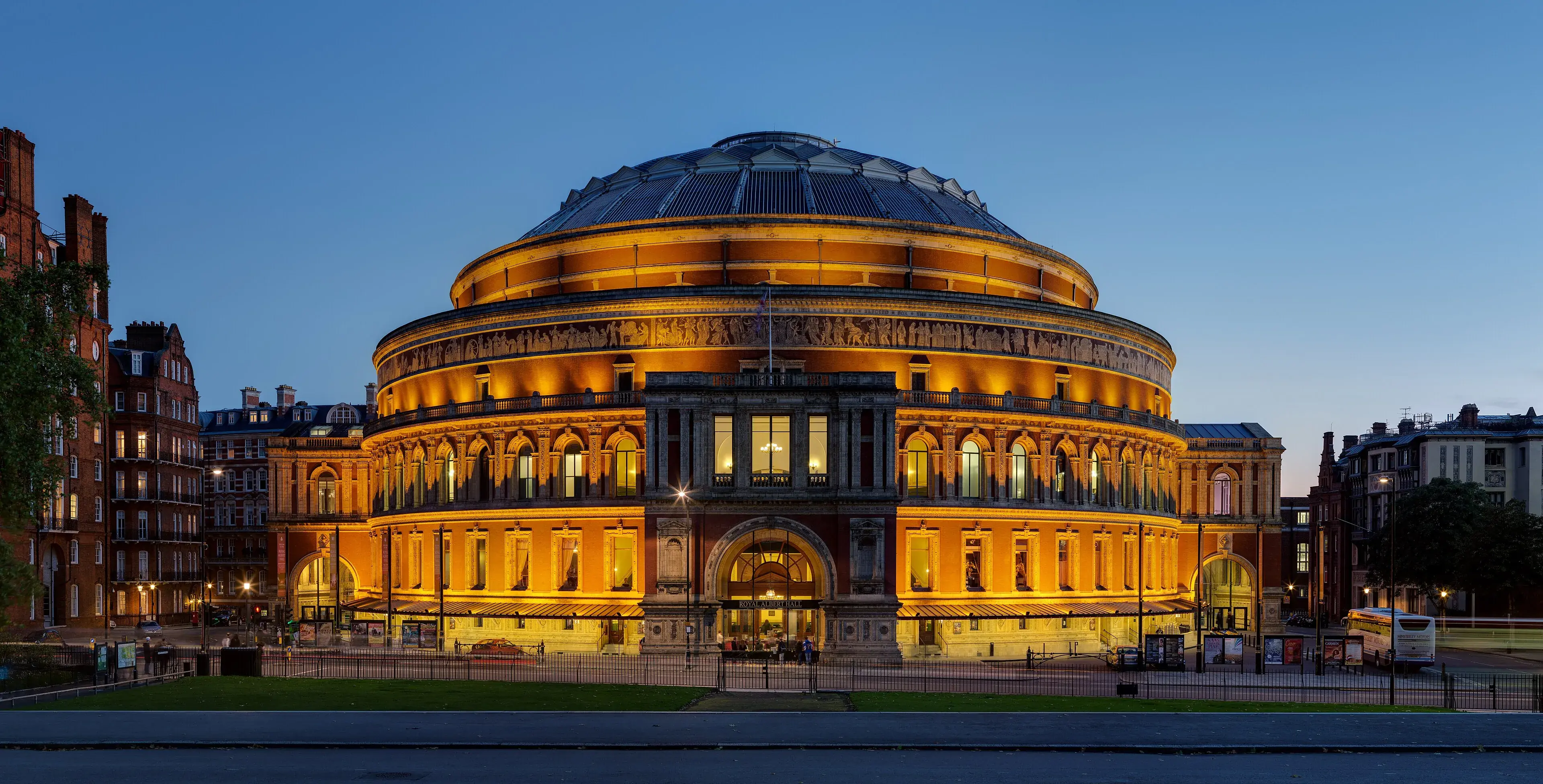
From Reactive to Real-Time: Structuring Service Delivery at the Royal Albert Hall
How the world's most famous stage replaced unstructured, manual request handling with a centralised, automated service platform. Performance became measurable and support became proactive.
97%
"Excellent" CSAT (Q4 2025)
89%
First-Contact Resolution
79 min
Avg Response Time
4h20
Avg Resolution Time
About the Royal Albert Hall
The World's Most Famous Stage
The Royal Albert Hall is one of the world's most iconic venues. For over 150 years, it has played host to legendary artists and events across music, sport, awards ceremonies, and more. With a high volume of time-sensitive activity (supporting live events, ticketing systems, regulated environments, and staff onboarding) IT plays a central role in keeping the Hall operating day to day.
Requests need to be handled quickly and accurately to avoid knock-on effects elsewhere in the organisation. When a box office system goes down or a new starter can't access their account, there's no buffer. The show must go on.
The Challenge
A Shared Queue Keeping the Team Reactive
The Royal Albert Hall's IT team was using Spiceworks to manage requests, but it operated primarily as a shared queue rather than a structured intake process. Requests arrived through email, phone, and walk-ups, channels that made it impossible to enforce consistent categorisation or capture necessary details upfront.
The result: the team spent significant time manually triaging tickets and chasing down missing information before any work could begin. Several key processes were also restricted by physical formats. New starter requests were paper-based, and approvals required physical signatures, meaning IT could be delayed for days simply waiting for a sign-off to arrive.
System change requests from other teams were sent as emails, a format that inherently lacks the structure to capture critical details consistently. And without any systematic reporting, there was no way to measure service performance or spot patterns over time.
"Our previous system, Spiceworks, relied heavily on a basic shared queue and lacked automated routing capabilities. Because the tool couldn't support structured assignment workflows, our entire team — right up to the Head of IT — had to take an 'all-hands-on-deck' approach to manually pull tickets. While this high level of teamwork ensured we always got the job done, the platform's limitations ultimately kept us in a reactive state rather than allowing us to strategically manage the workload."
— Spencer Trim-West, Service Desk Manager, Royal Albert Hall
The Solution
Structure, Automation, and a Single Portal
The focus was to introduce structure to how requests were raised and handled, while keeping the process straightforward for staff. A central portal guided users to the right request type and captured required information upfront, immediately reducing reliance on emails, phone calls, and walk-ups as the primary entry point.
Manual processes were redesigned from the ground up. New starter requests moved from paper forms to structured digital submissions, with approval workflows built in. Requests could be routed automatically to the appropriate approver and progressed without IT needing to manually intervene, allowing work to begin as soon as approval was given, in some cases within an hour.
Automation was applied to reduce repetitive handling and improve consistency. Incoming emails were categorised automatically, and notifications for specific requirements were standardised so the right teams were informed every time.
"It just takes away that workload for us. Once it's set up, the approvals and notifications happen automatically, so we don't even have to intervene."
— Spencer Trim-West, Service Desk Manager, Royal Albert Hall
As this approach proved effective, it extended beyond IT to support other operational teams. For a live venue, this was particularly important for box office systems, where unstructured requests could directly affect ticketing and event operations. The box office function adopted structured request forms for common system-related tasks, replacing ad-hoc emails with defined intake that captured the detail needed to act.
Service feedback and reporting were embedded into day-to-day operations for the first time, making it possible to understand demand, measure experience, and plan ahead rather than simply respond.
The Results
Measurable, Consistent, and Proactive
The shift to Halo ITSM delivered more consistent request handling, improved visibility, and measurable service performance across IT and operational teams for the first time.
97% "Excellent" CSAT in Q4 2025: satisfaction surveys sent on every ticket-related email, maintaining consistently high scores
89% first-contact resolution: structured request forms capture the right information upfront, reducing unnecessary follow-up
79-minute average response time and 4h20m average resolution time, tracked and reported quarterly for the first time
New starter onboarding transformed: paper forms and physical signatures replaced with automated digital approvals, enabling IT to begin setup immediately
Box office and operational teams onboarded: structured request handling extended beyond IT into core event-critical functions
Service performance now visible and plannable: quarterly reporting gives the team data to anticipate demand, not just react to it
"Because we can see the data now, we can actually plan ahead instead of just reacting."
— Spencer Trim-West, Service Desk Manager, Royal Albert Hall
With this foundation in place, the team is now able to plan for upcoming changes and bring the same structured, proactive approach to other functions across the organisation.
Ready for results like these?
Get in touch and one of our consultants will be in touch within one business day. No commitment, no sales pressure.