One platform.
Every organisation separated.
Halo Organisations lets a single Halo ITSM instance serve multiple completely separate organisations — each with their own data, portal, branding, SLAs, teams, and email templates. It's a core platform feature, included in every licence.
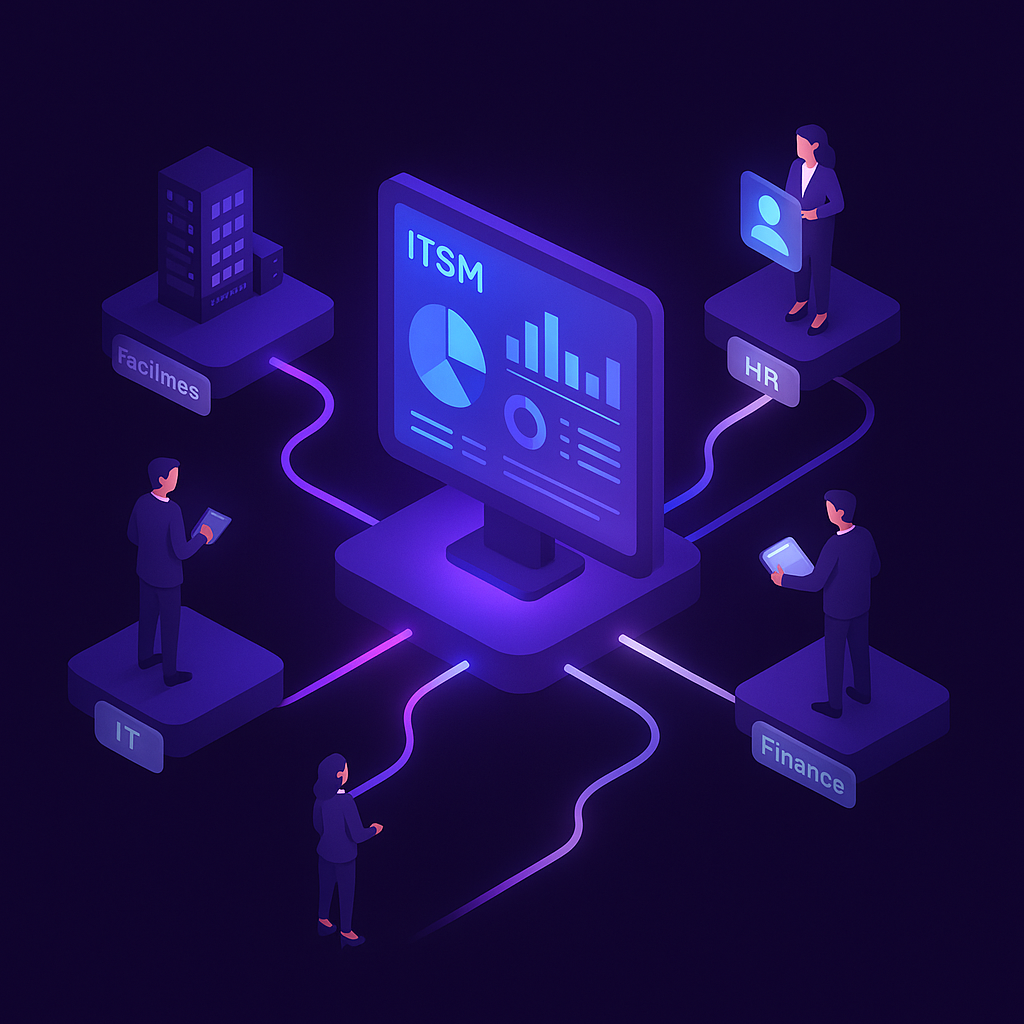
Multi-tenancy. Out of the box. Included.
Each organisation you create gets a complete, isolated environment — its own users, data, portal, departments, and workflows. Within each organisation you get a full hierarchy of Departments and Teams, keeping agents structured at every level.
Complete data isolation
Each organisation's tickets, assets, users, and configurations are fully isolated. Agents in one organisation cannot see another's data unless explicitly granted cross-organisation access.
Per-organisation branding
Each organisation gets its own branded self-service portal with a dedicated URL, custom colours, and logo. End users access their company's portal from their own domain — they never know it's running on a shared platform.
Independent workflows and SLAs
Each organisation can have its own service catalogue, SLA definitions, escalation paths, automations, and approval workflows — all managed independently without affecting other organisations.
Cross-organisation reporting
Administrators with the right permissions can report across all organisations simultaneously — aggregating SLA performance, ticket volumes, and workload across the full estate from a single view.
Per-organisation email templates
Each organisation has its own message group — a full set of customisable email templates with its own outgoing reply address. Client-facing communications are correctly branded and routed from day one, with no bleed between organisations.
Departments and Teams within each org
Each organisation supports its own hierarchy of Departments and Teams — with load-balanced ticket assignment and per-team access controls. Structure your agents exactly as the client's business is structured, without affecting any other organisation.
Configured in the UI — not in code
New organisations are created through Halo's admin interface. No scripting, no architectural planning, no test environments required before go-live. A built-in Organisational Chart gives admins a live view of all Agents, Teams, and Departments across the instance.
Included in the licence
Halo Organisations is not a premium add-on. It is part of the core Halo platform — the same licence that includes AI, 250+ integrations, and every ITSM module. No extra cost, no negotiation.
Who benefits from Halo Organisations?
Any organisation that needs clean separation between groups — without the overhead of building a custom multi-tenant architecture.
Managed Service Providers
Run all your clients from a single Halo instance. Each client gets their own portal, branding, ticket queue, SLAs, and reporting — fully isolated. Scale new clients in hours, not weeks.
Multi-subsidiary enterprises
A holding company with multiple trading entities can run a single Halo instance where each subsidiary has its own service desk and SLA structure — while central IT retains visibility across the full estate.
Geographically distributed teams
Regional IT teams operating under different SLA agreements or working hours can be structured as separate organisations — each with their own escalation paths — while sharing a common platform.
ESM across departments
IT, HR, Facilities, and Finance each operating as a separate organisation within the same Halo instance. Each department has its own service catalogue and portal, with full cross-department admin visibility.
Growth-stage businesses
Companies acquiring or integrating new business units can onboard each entity as a new Halo Organisation — maintaining separation during integration with no additional licensing cost.
ServiceNow migrations
Organisations migrating from ServiceNow and currently using Domain Separation can replicate their multi-tenant structure in Halo Organisations — in a fraction of the time it originally took to configure.
What about Domain Separation?
ServiceNow's multi-tenancy feature — Domain Separation — is one of the most complex in the ecosystem. If you're migrating from ServiceNow, here's what changes.
Domain Separation must be planned before go-live. Retrofitting it into an existing ServiceNow instance is one of the most technically demanding operations in the platform — often requiring an architecture review, data migration, and re-testing of every workflow.
Domain Separation is not included in a standard ServiceNow subscription. Depending on your contract, enabling it requires a separate entitlement — adding cost on top of an already expensive platform that charges per module, per user, and per feature.
Once your domain hierarchy is set, changing it is painful. Domains are deeply embedded in records, access controls, and workflows. A structural change means touching thousands of records — and the risk of breaking existing configurations is high.
Every database query in a domain-separated instance carries additional overhead. ServiceNow must evaluate domain visibility for each record returned. At scale, this contributes to the performance degradation that many large ServiceNow customers report.
Domain Separation has its own configuration model, permission structure, and failure modes. Getting it wrong — particularly around visibility rules and cross-domain data sharing — causes data leakage or over-restriction. This is not beginner territory.
Each ServiceNow upgrade must be regression-tested against your domain configuration. Customisations interact with domain rules in ways that ServiceNow's generic upgrade path doesn't account for — adding significant test overhead to every major release.
"We spent three months architecting Domain Separation before a single end user touched the platform. It worked — but I wouldn't call it simple. If we were doing this again, I'd ask why we needed that complexity in the first place."
IT Director — FTSE 250 manufacturer (moved to Halo in 2025)
How they compare.
We've configured both. We know which one is faster.
Allied ESM's founding team comes from the ServiceNow ecosystem. We've planned, configured, and supported Domain Separation implementations — and we've migrated organisations away from that complexity into Halo Organisations.
We can help you understand whether Halo Organisations meets your multi-tenancy requirements, and if you're migrating from ServiceNow, we can map your existing domain structure directly onto Halo's model.
Frequently Asked Questions
Common questions, answered directly.
What is Halo Organisations?
Who benefits most from Halo Organisations?
How does Halo Organisations compare to ServiceNow Domain Separation?
Is Halo Organisations included in the standard licence?
How is Halo Organisations different from running multiple separate Halo instances?
Ready to see Halo Organisations in action?
Whether you need multi-tenancy for an MSP, a multi-entity enterprise, or ESM across departments — we'll show you exactly how it works for your use case.
Also in Halo Platform
One licence. Every capability. Nothing to add on.