
Halo Salesforce → Halo Migration

Migrating from Salesforce to Halo.

If you're on Salesforce Sales Cloud staring down a renewal, an Agentforce add-on quote, or another edition upgrade just to keep the features your team already relies on — there's a simpler path. Halo CRM replaces Salesforce with one licence, one price, and AI included from day one. No Sales Cloud, Service Cloud, or Marketing Cloud to stack. Allied ESM, a pure play Halo partner, scopes and delivers the migration.

Talk to a Halo Expert
94%

of sales organisations plan to consolidate their tech stack in the next 12 months

Source: Salesforce, State of Sales, 2022

1

platform, one price — no Sales Cloud, Service Cloud, or Marketing Cloud to licence separately

Still need Salesforce?

Halo's native Salesforce integration syncs accounts, contacts, opportunities and cases both ways — so you can run Halo and Salesforce side by side during a phased transition.
✓ Halo Certified ✓ Bi-Directional Sync 🇬🇧 UK Based

The Structural Case

Why UK Revenue Teams Are Leaving Salesforce

Salesforce is powerful — but its packaging works against you. The platform is built around tiered editions and separate clouds, so the features a growing team actually needs are rarely included in the price you were quoted at signup.

What's Gated, and What Isn't

Salesforce Sales Cloud

AI (Agentforce)Paid add-on
Quoting / CPQSeparate product
Customer service deskSeparate cloud (Service)
Campaigns & marketingSeparate cloud (Marketing)
Self-service portalGated below top tier
Configuration changesAdmin / consultant time

Halo CRM

AI (lead scoring, next best action, outreach)✓ Included
Quoting & sales orders✓ Included
Customer service desk✓ Included
Campaigns & sequences✓ Included
Self-service portal✓ Included
Configuration changes✓ Your own admin, no-code

Sales, service, and marketing are sold as three separate Salesforce clouds, each licensed and configured independently — and analysis of published Salesforce contracts shows the resulting add-on stack can represent a large share of total contract value once AI, CPQ, and premium support are added. Halo's answer is structural: one licence, one platform, nothing held back.

Source: SalesforceNegotiations, 2026 Salesforce Pricing Guide — add-on stack analysis of published Salesforce contracts.

94%

of sales organisations plan to consolidate their tech stack in the next 12 months to boost productivity.

Source: Salesforce, State of Sales, 2022

51%

of sales leaders using AI say disconnected systems are actively slowing down their AI initiatives.

Source: Salesforce, State of Sales, 2026

There's also the ongoing dependency to consider. Salesforce implementations almost always involve a third-party partner for specialised configuration and custom development, and that relationship rarely ends at go-live — it becomes the default route for changes that should take an admin ten minutes. Renewal is where the two problems meet: as the add-on stack grows year over year, so does the number of things that need re-negotiating, usually with limited bargaining power once the platform is embedded across the business.

The Halo Difference

One Platform. One Price. Nothing Held Back.

Every capability below is part of the same Halo licence — not a cloud you buy separately, not a tier you upgrade into.

One Licence, Everything Included

Pipeline, quoting, campaigns, accounts, and reporting all come in a single Halo licence. No Sales Cloud, Service Cloud, or Marketing Cloud to buy separately, and no edition ladder to climb as your team grows.

AI Included, Not an Add-On

Lead scoring, next best action, outreach drafting, and AI report analysis are part of every Halo licence. There's no Agentforce-style upgrade tier and no separate AI consumption charge to plan around.

Configure Without Consultants

Halo's no-code environment lets your own admin build workflows, dashboards, and automations — the kind of change that on Salesforce usually means raising a ticket with an implementation partner or waiting on developer time.

Quoting & CPQ Included

Raise a quote straight from the opportunity, with secure signing and automatic sales order creation on approval — all included in the licence, not a separate CPQ product to configure and pay for.

Salesforce vs Halo

A structural look at how the two platforms differ — not a price comparison, a capability one.

Salesforce Halo
Pricing model Tiered editions + paid add-ons Single all-inclusive licence
AI Agentforce — paid add-on on Enterprise/Unlimited Included in every licence
Quoting / CPQ Separate CPQ product Included, raised from the opportunity
Customer service desk Separate product (Service Cloud) Included in the same platform
Marketing & campaigns Separate product (Marketing Cloud) Included, no contact-tier pricing
Self-service portal Add-on below the top tier Included as standard
Native integrations AppExchange + partner development 250+ native integrations included
Deployment options Cloud only Cloud (AWS) or on-premises
Contract flexibility Named seats, annual terms Named & concurrent, mixed

Native Salesforce Integration

You Don't Have to Cut Over in One Weekend

Halo has a native, bi-directional Salesforce integration — so a phased transition is genuinely possible, not just a slide in a pitch deck. Accounts, contacts, opportunities, and cases (including case comments) sync both ways, meaning your team can start working in Halo while Salesforce stays live for the parts of the business that aren't ready to move yet.

  • Bi-directional sync for accounts, contacts, opportunities, and cases, including case comments
  • Field-level mapping and SOQL filtering, so you control exactly what syncs and when
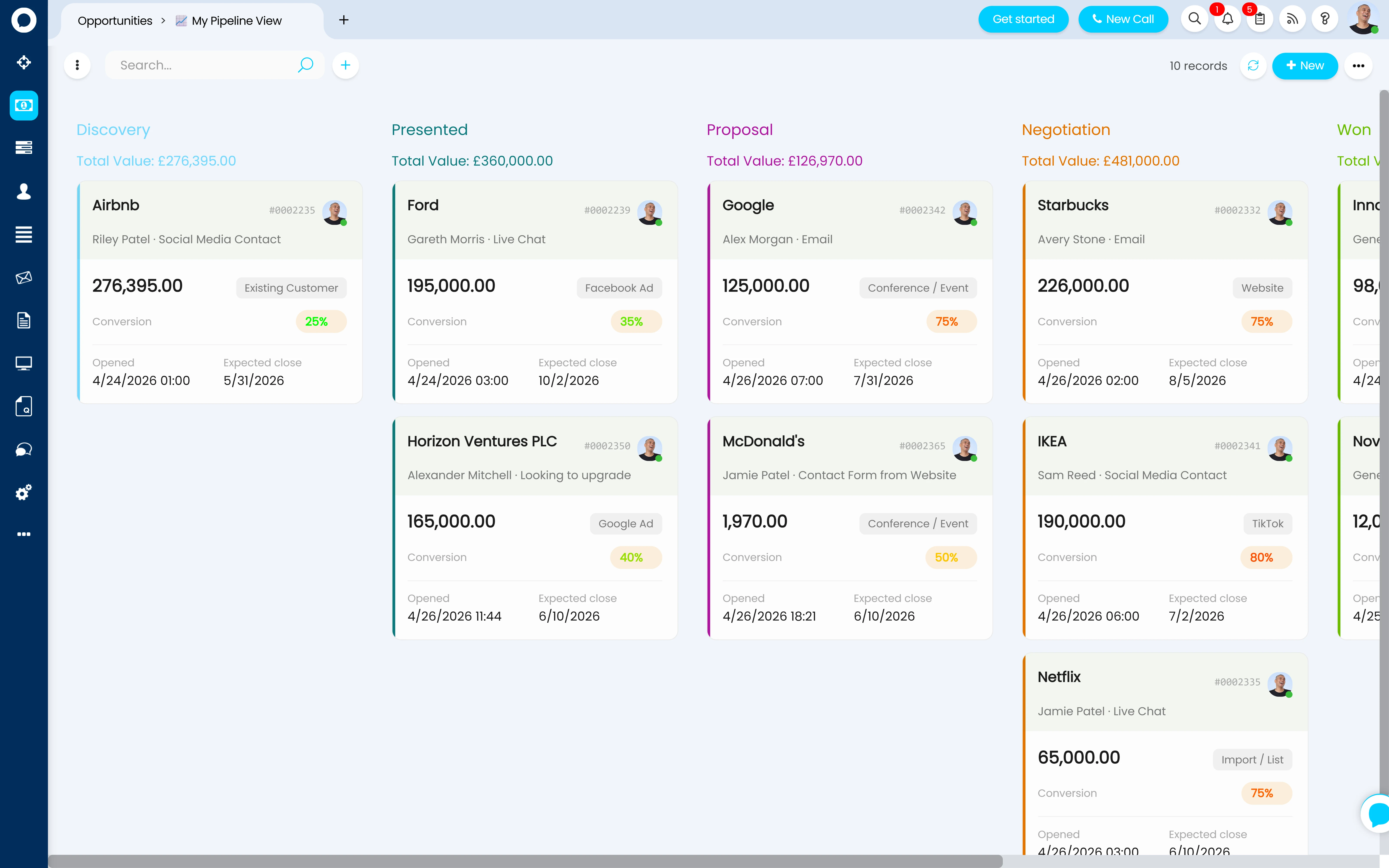
  • Opportunity stages map to Salesforce stages automatically, keeping both systems aligned mid-transition
  • Attachments sync per entity, so nothing gets left behind in the old system

Some teams use it to run a clean, phased migration. Others keep it running long-term as a genuine dual-platform integration. Either way, it's part of Halo's 250+ native integrations →

Halo CRM Opportunities Kanban — deals grouped in Discovery, Presented, Proposal, Negotiation and Won stages, the stages Salesforce opportunities map onto

How It Works

What Actually Moves From Salesforce to Halo

Accounts, contacts, opportunities, historic records and cases, and attachments — migrated using Halo's CSV and migration tooling, with field mappings agreed with you before anything moves.

1

Discovery & Data Mapping

We review your Salesforce org — accounts, contacts, opportunity stages, custom fields, and existing integrations — and map them onto Halo's CRM structure before anything is built.

2

Halo Design & Build

Pipelines, opportunity types, workflows, and quoting configured to match how your team actually sells — improved where Salesforce required a workaround.

3

Data Migration & Integration

Accounts, contacts, opportunities, historic records, and attachments imported with agreed field mappings. Where Salesforce needs to stay live during the transition, Halo's native bi-directional integration keeps both systems in sync.

4

Training & Change Adoption

Allied ESM's Change & Adoption practice gets your sales and service teams confident on Halo from day one — not just deployed, adopted.

5

Go-Live & Ongoing Support

We go live with you, not just hand over documentation. Allied ESM's managed services team is available post-launch to optimise and expand your Halo CRM environment.

Allied ESM scopes Salesforce to Halo migrations as fixed-price engagements, so you know the full cost before work begins.

Why Allied ESM

A Pure Play Halo Partner, Built for This

Every Allied ESM consultant is Halo certified, and our team's roots run through the ServiceNow ecosystem too — giving us real depth in enterprise platform migrations, not just Halo product knowledge.

100%

Halo-focused. No split attention, no competing platforms — every hour we invest goes into being the best Halo partner on the market.

Dual Certified

Halo and ServiceNow certified across the team — giving us a genuinely informed view of what moving off an incumbent enterprise platform actually involves.

UK Based

Headquartered in London, delivering Halo CRM migrations for mid-market organisations across the UK, fully remote and UK-timezone.

Common Questions

Frequently Asked Questions

Honest answers to the questions we hear most from teams considering the move from Salesforce to Halo.

Can we migrate our Salesforce data into Halo?
Yes. Accounts, contacts, opportunities, historic records, and attachments can all be migrated using Halo's import tooling, with field mappings agreed with you before anything moves. Allied ESM scopes and delivers Salesforce to Halo migrations as fixed-price engagements, so the full scope and cost is agreed up front.
What happens to our existing Salesforce integrations?
Halo has a native, bi-directional Salesforce integration, so you can keep specific integrations connected to Salesforce and run Halo alongside during a phased transition. Where an integration needs to be rebuilt to point at Halo instead, Allied ESM can scope and deliver that from Halo's library of 250+ native integrations.
Do we lose CPQ or quoting capability?
No — you gain it as standard. Salesforce sells CPQ as a separate product on top of Sales Cloud. Halo includes quoting and sales order creation in every licence: raise a quote directly from the opportunity, send it for secure signing, and generate the sales order automatically on approval.
How long does a Salesforce to Halo migration take?
It depends on the complexity of your Salesforce org — how many custom fields, integrations, and opportunity stages are in play. Allied ESM will scope an exact timeline during discovery, informed by the data mapping and integration work identified up front, rather than quote a generic figure that doesn't reflect your environment.
Can we run Halo and Salesforce at the same time during the transition?
Yes. Halo's native Salesforce integration syncs accounts, contacts, opportunities, and cases both ways, so teams can move onto Halo in stages — department by department, or team by team — without losing visibility of deals still being worked in Salesforce.
Is the AI really included, not a paid tier?
Yes. Lead scoring, next best action, outreach drafting, and AI report analysis are part of every Halo licence — there is no separate AI tier, no per-user AI add-on, and no usage-based AI billing to plan around, unlike Salesforce's Agentforce, which sits behind Enterprise and Unlimited editions as a paid add-on.
What does Halo cost?
Halo is priced on one all-inclusive monthly licence — pipeline, quoting, campaigns, AI, reporting, and 250+ native integrations are all included, with named and concurrent licence options you can mix within the same organisation. See Halo's all-inclusive UK pricing →
What if we're mid-contract with Salesforce?
That's common, and it's exactly what the native Salesforce integration is for. Allied ESM can plan a phased transition timed to your renewal date — building and testing Halo now, running both platforms in sync, and completing the cutover when your Salesforce contract actually ends.

Keep going: the Halo CRM story

On HubSpot instead of Salesforce? See the HubSpot to Halo guide →

Ready to Leave Salesforce Behind?

Talk to a Halo partner that knows what a real migration involves — data, integrations, adoption — and scopes it as a fixed-price engagement, so you know the full cost before work begins.

Official Halo Partner

Allied ESM is a pure play Halo partner — licensing, implementation, consulting & managed services.